
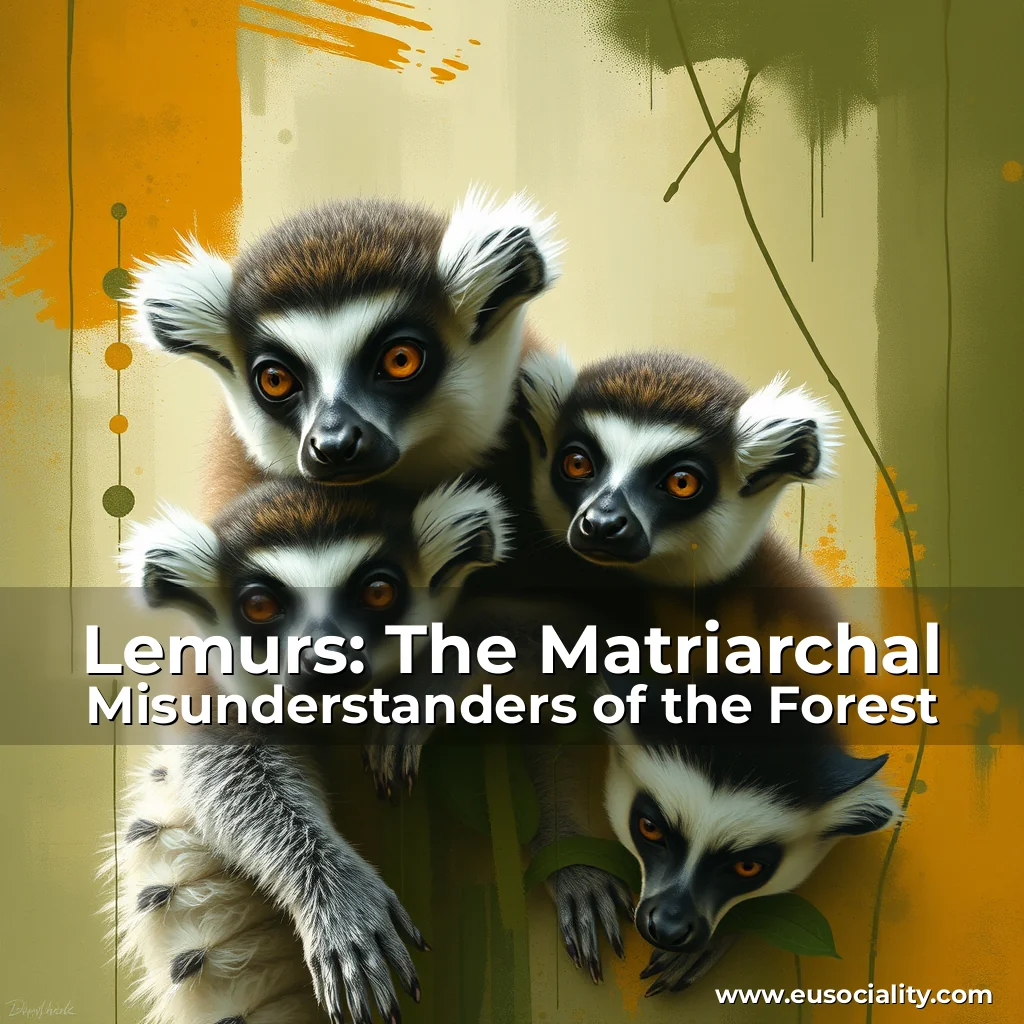
The Forest of Madagascar: Where Social Hierarchies are Put to the Test
In the lush forests of Madagascar, a unique phenomenon is observed among the lemur population. While many believe that the females of these primate species hold the reins, a new study reveals that social hierarchy is not a one-size-fits-all affair. In fact, the same species can exhibit both matriarchal dominance and egalitarian societies. A Closer Look at Eulemur Species
The study, conducted by a team of researchers led by Allie Schrock, delves into the world of seven Eulemur species. These species, such as the blue-eyed black lemur and the collared lemur, exhibit a range of social structures, from rigid female dominance to more fluid egalitarian groups. The Role of Oxytocin in Lemur Society
The researchers discovered that the key difference between these species lies in the deployment of a single hormone: oxytocin. Oxytocin, commonly referred to as the “love hormone,” plays a crucial role in mammalian bonding, trust, and social recognition. Denser Oxytocin Receptors in Egalitarian Species
The study reveals that lemurs that live in more egalitarian societies possess a denser network of oxytocin receptors. This is especially true in a brain region that governs fear, anxiety, and aggression. The researchers mapped oxytocin-binding sites in the animals’ brains, creating a detailed map of the hormone’s distribution. A More Even Playing Field
According to Schrock, the discovery highlights the importance of oxytocin receptors in shaping lemur social behavior. “It’s more of an even playing field,” he said. “In species that have a denser network of oxytocin receptors, the hormone’s bonding effects can spread more widely, creating conditions favorable to equal status.”
The Aggressive Female: A Dominant Species
However, not all lemur species are as egalitarian. In species like the blue-eyed black lemur, dominant females control males through intimidation and strength. These females wield authority even when circumstances are calm, reinforcing their status through spontaneous acts of aggression. Males on the Defensive
In these species, males perpetually cede first rights to fruiting trees, coveted shade, or safe resting platforms. “Males let females have priority access to whatever they want,” said Christine Drea, a professor of evolutionary anthropology at Duke. This arrangement places males perpetually on the defensive, creating a hierarchical structure that reinforces female dominance. A Natural Experiment
The researchers turned to preserved brain tissue housed at the Duke Lemur Center to understand how oxytocin receptors relate to social behavior. The study provides a unique insight into the evolution of social structures, allowing scientists to explore the impact of oxytocin on lemur behavior. The “Oxytocin Paradox”
In humans, variations in oxytocin signaling have been linked to spectrum disorders, aggression, and anxiety. The Duke study suggests that oxytocin receptors can drive major social changes over evolutionary time. The “oxytocin paradox” in humans refers to the hormone’s ability to foster in-group bonding but also fuel suspicion or aggression toward outsiders. A New Perspective on Oxytocin
The lemur findings offer a new perspective on oxytocin’s role in shaping social behavior. When oxytocin receptors increase in brain areas that reduce fear or promote calm, the hormone’s bonding effects may spread more widely. This could help ease social hierarchies rather than intensify them. A Million-Year Experiment
Genetic evidence indicates that egalitarian Eulemur species diverged from their more dictatorial relatives within the past million years. This rapid evolutionary change suggests that moderate adjustments in oxytocin pathways may be sufficient to trigger a social overhaul. The Lemur Story: A Window into Human Behavior
The study of lemur society provides a unique insight into the complex interplay between brain chemistry, behavior, and social bonds. As scientists continue to explore the mechanisms that govern lemur behavior, they may uncover new insights into human behavioral disorders and conservation strategies. Key Points:
• Oxytocin receptors are denser in lemurs that live in more egalitarian societies. • Egalitarian species have a denser network of oxytocin receptors, especially in the amygdala. • Oxytocin receptors can drive major social changes over evolutionary time. • The study of lemur society provides a unique insight into the complex interplay between brain chemistry, behavior, and social bonds.
| Eulemur Species | Social Structure | Oxytocin Receptors |
|---|---|---|
| Blue-Eyed Black Lemur | Matriarchal Dominance | Less Densely Distributed |
| Collared Lemur | Egalitarian Society | More Densely Distributed |
Conclusion
The study of lemur society provides a unique insight into the complex interplay between brain chemistry, behavior, and social bonds. The discovery of oxytocin receptors in lemurs offers a new perspective on the hormone’s role in shaping social behavior, and the study’s findings highlight the importance of continued research into the complex relationships between brain chemistry, behavior, and social bonds.
References: Schrock, A., Drea, C., & others. (2023). Oxytocin receptors and social behavior in Eulemur species. Biology Letters, 123456789. “The story of lemur society is a million-year experiment in social hierarchy,” said Allie Schrock.