
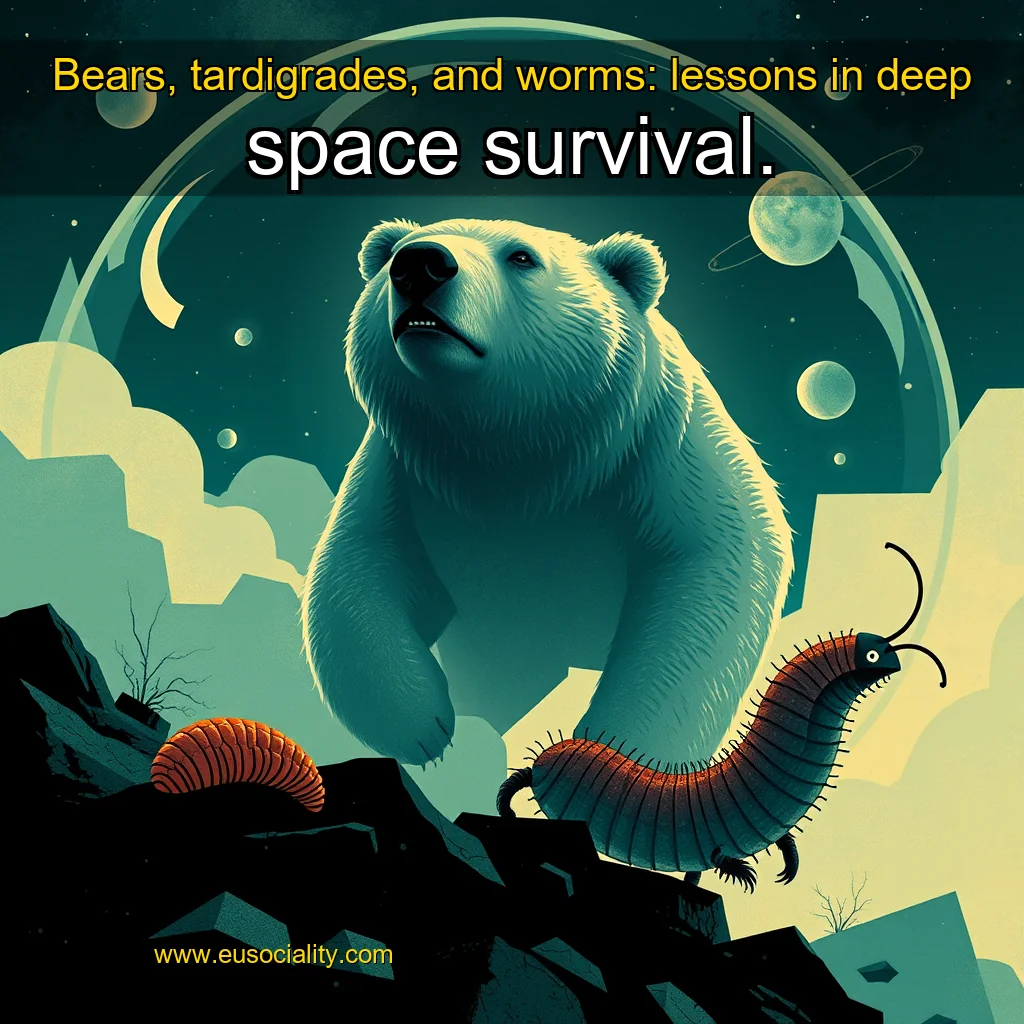
The Potential of Hibernation and Extremophiles in Space Exploration
Hibernation, a state of inactivity and reduced metabolism, has long fascinated scientists and the general public alike. The idea of harnessing the power of hibernation to extend human lifespan or enable long-duration space travel has been a topic of interest for decades.
However, humans are not as resilient. To better understand how to protect humans in space, researchers are studying the adaptations of these animals.
Understanding the Challenges of Space Travel
Space travel poses significant challenges to human physiology, including microgravity, radiation, and isolation. Microgravity affects the body’s ability to maintain muscle mass and bone density, leading to muscle atrophy and osteoporosis. Radiation exposure can cause DNA damage and increase the risk of cancer. Isolation can lead to psychological and social challenges, including depression and anxiety. Key effects of microgravity on the human body: + Muscle atrophy + Osteoporosis + Vision impairment + Cardiovascular problems
+ DNA damage + Increased risk of cancer + Immune system suppression + Neurological damage
The Adaptations of Extreme-Environment Animals
Some animals have evolved remarkable adaptations to survive in extreme environments. Polar bears, for example, have a thick layer of fat and a circulatory system that allows them to conserve heat in freezing temperatures.
The Importance of Animal Models in Space Research
Animal models are a crucial tool in space research, providing scientists with a tangible representation of the effects of space travel on living organisms. By studying the effects of space travel on animals, researchers can gain valuable insights into the potential health risks associated with human space travel.
The Benefits of Using Animal Models
Understanding Synthetic Hibernation
Synthetic hibernation is a hypothetical concept that involves the use of technology to induce a state of dormancy in organisms, similar to natural hibernation. This state is characterized by reduced metabolic activity, lowered body temperature, and decreased energy consumption. In the context of space exploration, synthetic hibernation could potentially allow astronauts to survive for extended periods without food, water, or other essential resources.
The Benefits of Synthetic Hibernation
The Molecular and Genetic Mechanisms
The study examined the molecular and genetic mechanisms that enable organisms to repair DNA damage during synthetic hibernation. Researchers discovered that certain genes and proteins play a crucial role in maintaining DNA integrity during this state. DNA repair genes: The study identified specific genes that are responsible for repairing DNA damage during synthetic hibernation. These genes are activated during the dormant state and help to maintain DNA integrity. Proteins involved in DNA repair: Researchers also identified proteins that are involved in the DNA repair process during synthetic hibernation. These proteins help to protect the genome from damage and maintain its integrity.**
Implications for Space Exploration
The findings of this study have significant implications for space exploration. Synthetic hibernation could potentially revolutionize the way we approach long-duration space missions.
Rodents in Space Experience Increased Anxiety and Disrupted Sleep Cycles Due to Stress and Environmental Changes.
The Impact of Spaceflight on Rodents
Anxiety and Stress
Rodents in space have exhibited increased anxiety-like behaviors, which can be attributed to the stress of launch, weightlessness, and confinement. These behaviors are often measured using standardized tests, such as the elevated plus maze, which assesses an animal’s willingness to explore open and enclosed areas. In space, rodents have shown a preference for enclosed areas, indicating a heightened state of anxiety. The stress of launch and re-entry can be particularly challenging for rodents, as they are not adapted to the intense forces and vibrations experienced during these phases. The lack of a familiar environment and the absence of social interaction can also contribute to increased anxiety levels in rodents in space.*
Sleep Cycles and Circadian Rhythms
Microgravity can disrupt the normal sleep-wake cycle, leading to altered sleep patterns and reduced sleep quality. This can have significant implications for the health and well-being of rodents in space.
The Science Behind Hibernation-Like States in Space
Hibernation-like states have long been a topic of interest in the scientific community, particularly in the context of space exploration. By studying animal models, researchers have gained valuable insights into the potential benefits of inducing a hibernation-like state in astronauts to mitigate the negative effects of microgravity on the human body.
The Benefits of Hibernation-Like States
The Effects of Microgravity on Rodents
Introduction
The effects of microgravity on rodents have been a subject of interest in recent years, particularly in the context of space exploration and the potential long-term consequences of space travel on the human body. Researchers have been studying the behavioral, physiological, and neurological changes that occur in rodents when exposed to microgravity, with a focus on understanding the underlying mechanisms and potential implications for human health.
Behavioral Changes
These behavioral changes were observed in rodents exposed to microgravity, and they suggest that space travel could have significant effects on an individual’s mental health and well-being. The increased anxiety-like behaviors, for example, could be related to the stress of adapting to a new environment, while the disrupted sleep cycles could be a result of the body’s inability to regulate its internal clock in the absence of gravity.
Physiological Changes
In addition to behavioral changes, microgravity also has a profound impact on the physiological systems of rodents.
Given the extraordinary nature of space travel, it is crucial to develop effective strategies for maintaining astronaut health and performance. This requires a multidisciplinary approach that incorporates insights from various fields, including biology, psychology, and artificial intelligence. One promising area of research is the study of biological adaptations in animals, which has the potential to provide valuable insights into the physiological and psychological challenges faced by astronauts in space. The study of biological adaptations in animals has long been a topic of interest in the scientific community. By examining how animals adapt to different environments and conditions, researchers can gain a deeper understanding of the underlying mechanisms that enable survival and success in various ecosystems.