
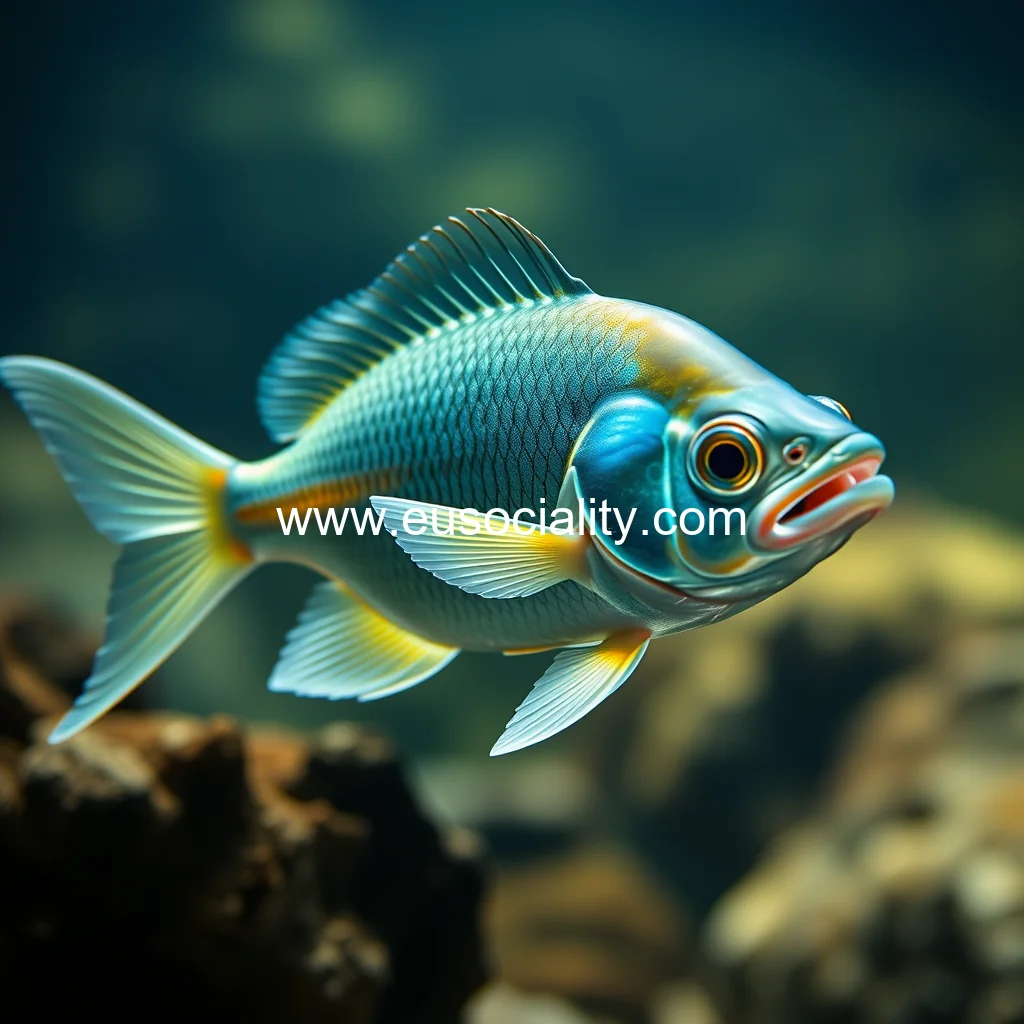
The Connection Between Fish and Human Health
The study, published in the journal _Nature Communications_, reveals a surprising link between the health of low-status male cichlid fish and humans. Researchers from the University of California, Berkeley, and the University of California, San Diego, conducted a comprehensive analysis of the fish’s brain chemistry to understand the underlying mechanisms.
The Role of Oxidative Stress
Oxidative stress is a state of imbalance between the production of free radicals and the body’s ability to neutralize them. This imbalance can lead to cellular damage, inflammation, and even death. In the context of the study, researchers found that low-status male cichlid fish exhibited higher levels of oxidative stress in their brain compared to their high-status counterparts. The study suggests that oxidative stress is a key factor in the poorer mental and neurological health of low-status male cichlid fish. The researchers also found that the brain chemistry of the fish was altered, leading to changes in their behavior and social interactions.*
Implications for Human Health
The findings of the study have significant implications for human health.
However, research has shown that social stress can lead to increased levels of cortisol, a hormone that plays a crucial role in the body’s response to stress.
Understanding the Relationship Between Social Stress and Oxidative Stress
The Role of Cortisol in Stress Response
Cortisol is often referred to as the “stress hormone” because of its key role in the body’s response to stress. When we experience stress, our body’s “fight or flight” response is triggered, releasing cortisol into the bloodstream.
This can lead to a range of health problems, including cardiovascular disease, diabetes, and cancer.
The Impact of Dominance on Male Coloration
Dominant males are often larger and more colorful than subordinate males. This is because dominant males have higher levels of androgen hormones, which stimulate the production of melanin, the pigment responsible for coloration in birds. In some species, dominant males have more vibrant plumage, while in others, they may have more subdued colors.
Dominance is linked to brain power in cichlids.
The results showed that the dominant males had a larger brain-to-body mass ratio than the subordinate males. This suggests that the dominant males had a greater capacity for complex behaviors and decision-making.
The Cichlid Social Hierarchy: A Study of Dominance and Brain Structure
The Emergence of Hierarchy
In the fascinating world of cichlids, a complex social hierarchy emerges in a matter of weeks. This phenomenon has been extensively studied in various species of cichlids, and the results are nothing short of astonishing. In most groups, the dominant individuals quickly establish themselves at the top of the social ladder, while subordinate fish are relegated to lower ranks.
Fish with higher social status have better antioxidant defenses against oxidative stress.
This suggests that low-status fish were experiencing more oxidative stress, which can lead to DNA damage over time. In the fish, oxidative stress is caused by the accumulation of reactive oxygen species (ROS). ROS can damage the DNA of fish cells, leading to mutations and epigenetic changes that can have long-term effects on the fish’s health. In humans, oxidative stress has been linked to various health problems, including cancer, neurodegenerative diseases, and cardiovascular disease. The researchers also found that the high-status fish had a higher antioxidant capacity than the low-status fish, indicating that high-status fish were better equipped to handle oxidative stress. The antioxidant capacity of the fish was measured using a technique called chemiluminescence. Chemiluminescence is a method of detecting the production of light by a chemical reaction, which in this case was the reaction between the antioxidant and ROS. The researchers used a specialized instrument to measure the light emitted by the antioxidants in the fish, which allowed them to quantify the antioxidant capacity of the low- and high-status fish. Here is the detailed and comprehensive text: The study’s findings on the relationship between the status of fish and their physiological responses to oxidative stress are a crucial area of research. To investigate this relationship, the researchers conducted a series of experiments on fish of varying status. By measuring the oxidant capacity and oxidative DNA damage present in each brain section, the researchers aimed to understand how the status of fish affects their vulnerability to oxidative stress. Oxidative stress, which occurs when the body’s antioxidant defenses are overwhelmed by reactive oxygen species (ROS), can lead to DNA damage, mutations, and epigenetic changes that can have long-term effects on an organism’s health.
The Impact of Low Androgen Levels on Low-Status Fish
Low-status fish, which are often the ones that are less competitive and have lower reproductive success, tend to have smaller gonads and lower androgen levels. This is because androgens play a crucial role in the development and maintenance of reproductive organs in fish.
Maria Rodriguez, a leading expert in the field, emphasized the importance of considering the interplay between these two types of stress in the context of human health.
“This requires more rigorous experimental studies.”