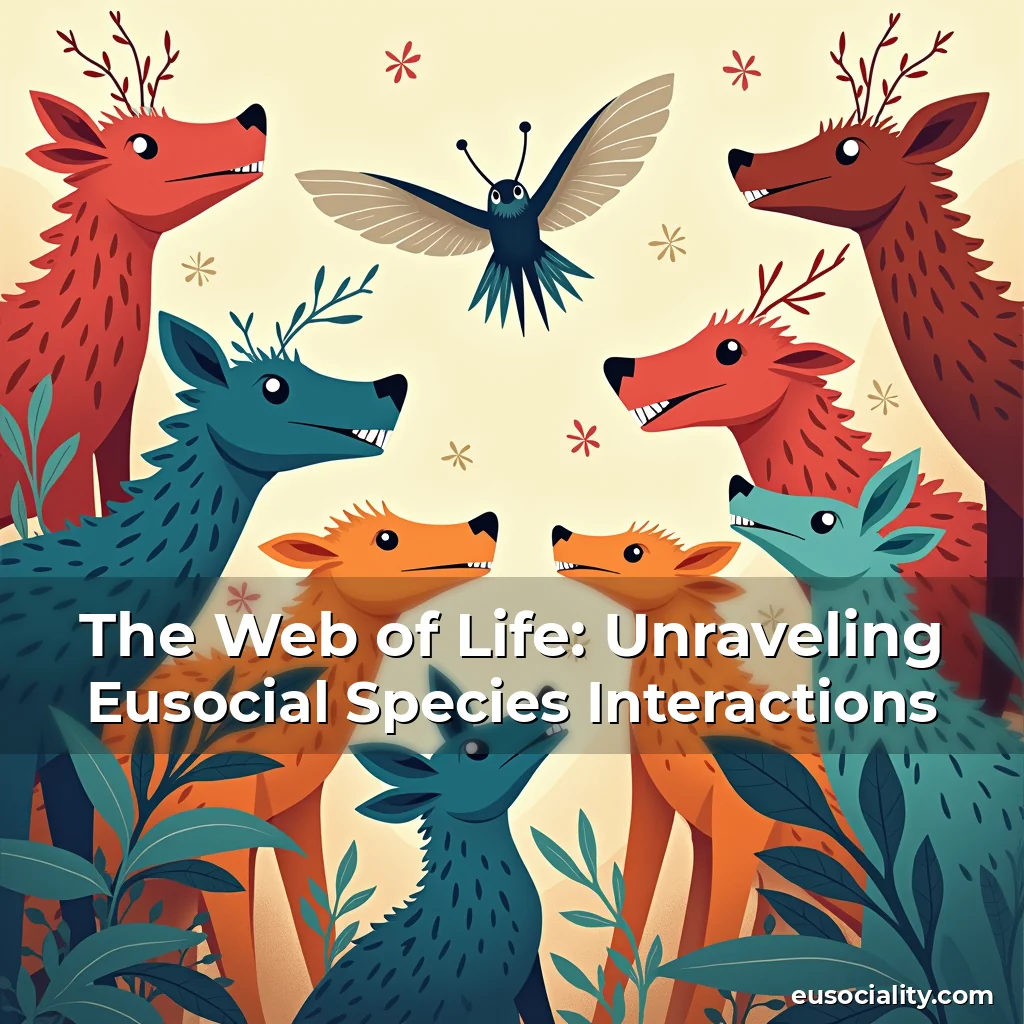
The Web of Life: Unraveling Eusocial Species Interactions
Eusociality—the highest level of animal cooperation—is a phenomenon that shapes ecosystems through intricate networks of species interactions. From ants farming fungi to bees defending hives against predators, eusocial insects exemplify complex interdependencies that ripple across ecological communities.
This exploration delves into the dynamic relationships between eusocial organisms and other life forms, revealing how cooperation, competition, and coevolution shape biodiversity. Understanding these interactions provides critical insights into ecosystem stability and evolutionary innovation.
Fundamental Principles of Eusocial Species Interactions
Eusocial species interact with others through a spectrum of relationship types, from mutualistic partnerships to competitive struggles. These interactions often drive evolutionary adaptations, shaping traits like specialized castes or chemical signaling mechanisms.
At the core of these dynamics lies the balance between individual survival and collective benefit. Worker ants, for example, may risk death to defend the colony, indirectly enhancing reproductive success of their genetically similar siblings.
- Mutualism: Symbiotic relationships where both parties gain advantages, such as leafcutter ants cultivating fungus gardens that provide sustenance while the ants protect the fungal cultures from pathogens.
- Competition: Resource rivalry between eusocial groups, observed in honeybee swarms competing for nectar-rich flowers during peak blooming seasons.
Coevolutionary Relationships in Eusocial Systems
Coevolution has forged some of nature’s most remarkable partnerships involving eusocial species. Ants and plants, for instance, engage in long-term symbiosis where ants guard plant roots in exchange for food rewards.
In tropical rainforests, certain ant species form obligate relationships with acacia trees. The ants reside in hollow thorns, protecting the tree from herbivores while feeding on Beltian bodies secreted by the plant.
Ant-Plant Mutualisms: A Case Study
Studies show over 80% of Acacia species rely on specific ant partners for protection. In return, the ants receive shelter and nourishment tailored to their dietary needs. This reciprocal arrangement has persisted for millions of years.
Researchers estimate that these mutualistic pairs have evolved together through at least three distinct adaptive pathways, demonstrating the power of natural selection in refining interspecies cooperation.
Predator-Prey Dynamics in Eusocial Colonies
Eusocial organisms face unique challenges from predators targeting their vulnerable members. Army ants, for example, employ coordinated raiding tactics to overwhelm prey defenses before consuming them en masse.
Some species develop sophisticated defense strategies against vertebrate predators. Termites construct mounds with hidden escape routes, allowing workers to flee rapidly when threatened by birds or mammals.
- Trophic Cascade Effects: When apex predators target eusocial colonies, cascading effects occur through entire food webs, influencing populations of secondary consumers and decomposers alike.
- Spatial Adaptations: Bees and wasps build nests in inaccessible locations to minimize predation risks, sometimes altering local microclimates around their habitats.
Competitive Pressures Between Eusocial Groups
Resource scarcity drives intense competition among neighboring eusocial colonies. Honeybees, for instance, may wage territorial battles over prime flower patches during pollination season.
Worker termites engage in combat with rival colonies, using mandibles to destroy enemy nests while secreting pheromones that confuse intruders. These conflicts often determine which group dominates a particular habitat.
Nest Architecture as Competitive Advantage
Research indicates that termite mounds constructed with thicker walls and deeper chambers reduce heat loss by up to 60%, giving colonies significant energetic advantages over less architecturally advanced rivals.
Burrowing ants modify soil composition to create optimal moisture levels inside their tunnels, outcompeting surface-dwelling relatives that lack comparable engineering capabilities.
Parasitic Relationships Within Eusocial Structures
Despite their organization, eusocial societies are vulnerable to parasites exploiting communal living arrangements. Social parasites manipulate host behavior to ensure their own propagation, often at great cost to the colony.
A notable case involves slave-making ants that infiltrate other colonies, kidnapping larvae to raise as worker servants. These parasites derive complete benefits while imposing genetic costs on their hosts.
- Pathogen Spread: Close quarters increase disease transmission rates, prompting eusocial species to evolve grooming behaviors and antimicrobial secretions as defensive measures.
- Social Manipulation: Some flies lay eggs in bee pupae, releasing chemicals that alter development trajectories, ultimately turning victims into zombie-like carriers for emerging adults.
Human Impact on Eusocial Ecological Networks
Anthropogenic activities disrupt delicate balances in eusocial interaction webs. Habitat fragmentation isolates populations, reducing genetic diversity essential for maintaining robust social structures.
Pesticide exposure affects communication systems reliant on chemical signals, impairing coordination among worker caste members. Colony productivity declines dramatically under chronic contamination scenarios.
Climate Change and Behavioral Shifts
Rising temperatures force eusocial species to adapt quickly, sometimes leading to behavioral innovations. Certain termite species now forage earlier in the day to avoid midday heatwaves, altering resource acquisition patterns.
Changes in precipitation regimes affect nest construction techniques. Subterranean ants adjust tunnel depth based on rainfall predictions, showcasing rapid phenotypic plasticity responses.
Conservation Implications of Eusocial Interaction Studies
Protecting eusocial species requires understanding their multifaceted roles within broader ecological contexts. Their interactions serve as early warning indicators of environmental degradation affecting multiple trophic levels.
Preserving intact interaction networks maintains ecosystem services like nutrient cycling and pest control. Loss of keystone eusocial species could trigger unpredictable cascades disrupting regional biodiversity.
- Habitat Connectivity: Maintaining corridors between fragmented landscapes allows eusocial species to establish new colonies and maintain healthy population genetics.
- Reduced Chemical Exposure: Limiting pesticide usage protects vital communication channels used by eusocial insects for coordinating tasks and responding to threats.
Future Directions in Eusocial Interaction Research
Advances in molecular biology offer unprecedented opportunities to study gene expression patterns underlying complex social behaviors. CRISPR technology enables precise manipulation of genes responsible for caste determination processes.
Machine learning algorithms analyze vast datasets tracking movement patterns, helping predict how climate change might reshape interaction networks in coming decades.
- Omics Approaches: Integrating genomics, proteomics, and metabolomics reveals molecular mechanisms governing cooperative behaviors across diverse eusocial lineages.
- Virtual Modeling: Computational simulations reconstruct ancient ecosystems, testing hypotheses about evolutionary transitions toward full eusociality.
Conclusion
The intricate web of interactions involving eusocial species underscores their pivotal role in maintaining ecological balance. From mutualistic alliances to fierce competition, these relationships reveal the complexity of life’s interconnectedness.
To safeguard these vital networks, future conservation efforts must prioritize preserving not only individual species but also the dynamic interactions that sustain thriving ecosystems. Continued scientific inquiry promises to unlock new dimensions of our understanding of social evolution and its far-reaching impacts.