
Their population has been declining steadily since the 1990s.
Understanding the Bonobo’s Habitat and Behavior
The Bonobo’s Natural Habitat
Bonobos inhabit the dense, tropical forests of the Democratic Republic of the Congo in Central Africa. Their habitat is characterized by lush vegetation, abundant water sources, and a diverse range of flora and fauna. The forests are home to a variety of other animals, including chimpanzees, gorillas, and okapi. The bonobo’s habitat is fragmented, with large areas of forest being cleared for agriculture, logging, and urbanization. This fragmentation has led to the isolation of bonobo populations, making it difficult for them to find food, shelter, and mates.*
The Bonobo’s Social Structure
Bonobos are highly social animals that live in large communities, typically consisting of several females and their offspring.
In this structure, the oldest female bonobo is the leader, and she is responsible for the well-being of the group.
The Study’s Objective
The primary objective of the study was to investigate the social and emotional development of the rescued bonobos. The researchers aimed to determine whether the orphaned bonobos would form close bonds with their peers and develop emotional intelligence.
Methods Used
The researchers employed a longitudinal study design, observing the bonobos over a period of several years. They conducted regular observations, noting the bonobos’ behavior, social interactions, and emotional responses. The researchers also collected data on the bonobos’ cognitive abilities, including problem-solving and learning. The study involved 15 rescued bonobos, ranging in age from 2 to 10 years old. The researchers used a combination of observational methods, including: + Video recordings + Behavioral assessments + Interviews with the sanctuary staff*
The Results
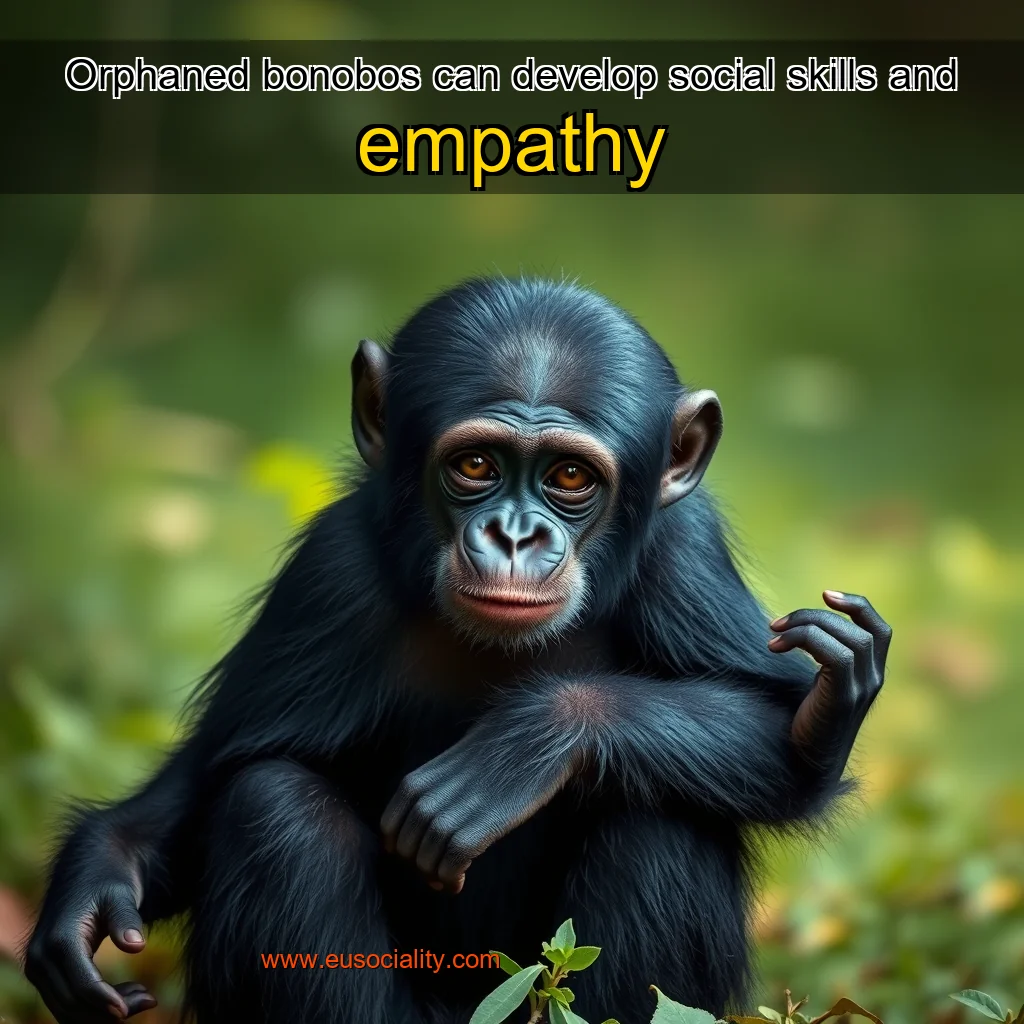
The researchers found that the rescued bonobos formed close bonds with their peers, demonstrating strong social connections and emotional intelligence. The bonobos learned to rely on each other for support and comfort, and they developed complex social behaviors, such as cooperation and empathy. The bonobos showed improved cognitive abilities, including problem-solving and learning. The researchers observed increased emotional intelligence, including self-awareness and self-regulation. The study demonstrated that the rescued bonobos were able to adapt and learn from their peers, forming strong social bonds and developing emotional intelligence.
The Implications
The study’s findings have significant implications for our understanding of social and emotional development in primates.
The bonobos were also found to be more aggressive than the non-orphaned bonos. The researchers found that the orphaned bonobos were more likely to engage in aggressive behavior when they were in a group setting.
The sanctuary provides a safe haven for these orphans, offering them a nurturing environment that fosters their social and emotional growth.
The Importance of Social Development in Orphaned Bonobos
Social development is a critical aspect of an individual’s overall well-being, particularly for primates like bonobos. In the wild, bonobos live in complex societies with intricate social hierarchies and relationships.
They are known for their peaceful nature and high level of social intelligence.
The Origins of Orphaned Bonobos
Orphaned bonobos are bonobos that have lost their mothers or have been separated from their social groups. This can occur due to various reasons such as poaching, habitat loss, or human conflict. In the wild, bonobos live in large communities with complex social structures. They are known to form close bonds with each other, and their social relationships are built on empathy, cooperation, and mutual respect.
The Challenges Faced by Orphaned Bonobos
Orphaned bonobos face numerous challenges in their daily lives. Some of the key challenges include:
The Resilience of Orphaned Bonobos
Despite the challenges they face, orphaned bonobos have shown remarkable resilience and adaptability.