Science club’s wolves in sisters tracking expedition!
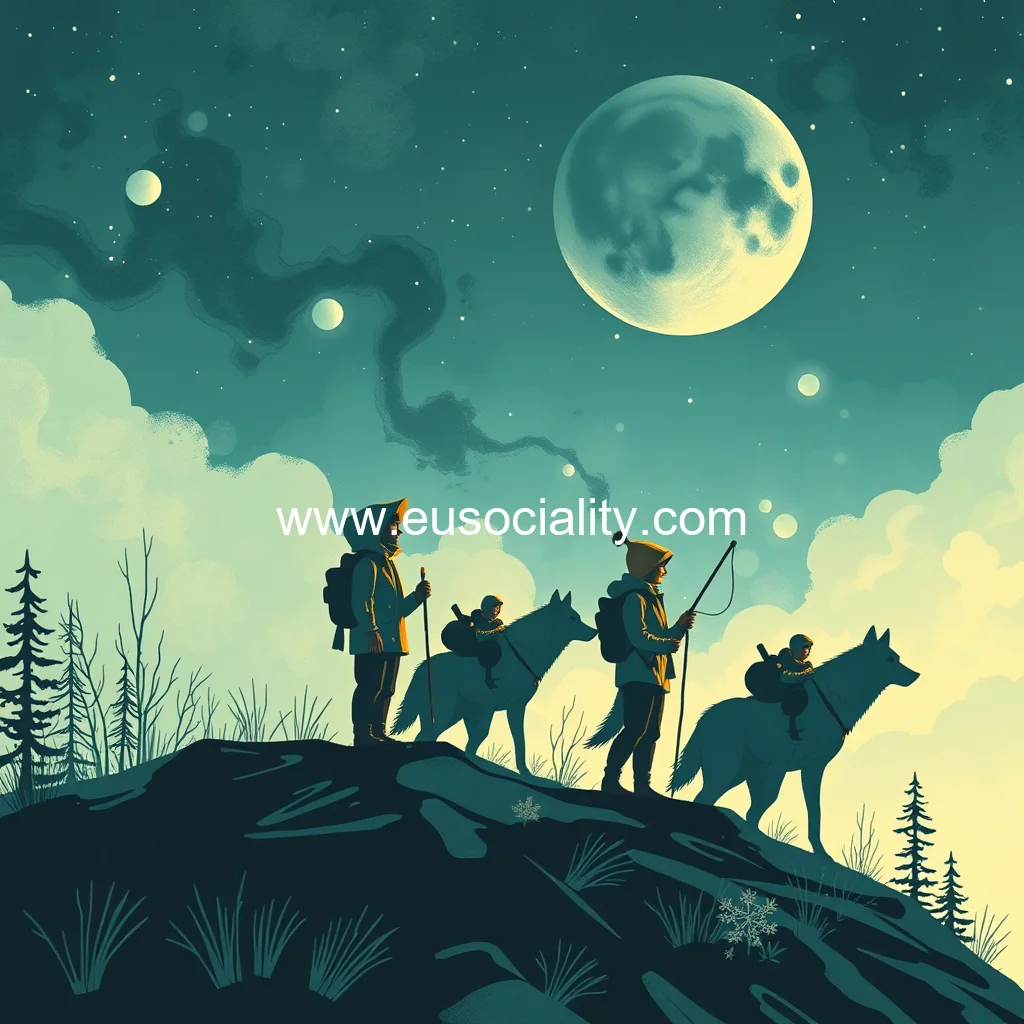
Artistic representation for Science club's wolves in sisters tracking expedition!

Wolves are highly social creatures that live in packs, while humans are highly social creatures that live in communities.

The Wolves’ Social Structure

Wolves are renowned for their intricate social hierarchy, with a dominant male and female leading the pack. This structure is crucial for their survival, as it allows them to hunt and protect their territory effectively. The pack’s social dynamics are characterized by a strict division of labor, with each member contributing to the group’s well-being. The alpha pair, consisting of the dominant male and female, plays a vital role in decision-making and conflict resolution. Subordinate wolves, often younger or less experienced, learn from the alpha pair and take on specific roles within the pack. The pack’s social structure is also influenced by the presence of beta wolves, who act as mediators and enforcers of the pack’s rules.

Human Social Structure

Humans, on the other hand, have a more complex and dynamic social structure. Our societies are characterized by a wide range of social norms, values, and institutions that shape our relationships and interactions.

His work focuses on the reintroduction of wolves to the western United States.

The Reintroduction of Wolves to the Western United States

The reintroduction of wolves to the western United States is a complex and multifaceted process that has been ongoing for several decades. The story of wolf reintroduction in the United States is deeply intertwined with the history of conservation efforts in the country.

Early Years of Wolf Conservation

In the early 20th century, wolves were listed as an endangered species under the Endangered Species Act (ESA). This designation was largely due to the widespread hunting and killing of wolves by ranchers and hunters, who viewed them as a threat to livestock and sport hunting. The ESA provided a framework for conservation efforts, but it was not until the 1990s that the first reintroduction efforts began.

Key Milestones

  • 1995: The first wolf reintroduction program was established in Yellowstone National Park, with the goal of reestablishing a sustainable population of wolves in the park.

    news

    news is a contributor at Eusociality. We are committed to providing well-researched, accurate, and valuable content to our readers.

    You May Also Like

    Artistic representation for Map of Life team wins 2 million prize for innovative rainforest tracking

    Map of Life team wins 2 million prize for innovative rainforest tracking

    MOLRA's approach focuses on rapid, large-scale assessments of biodiversity hotspots, using a combination of remote sensing, machine learning, and citizen...

    Artistic representation for Loneliness can be a killer : you dont have to go the physical risks alone

    Loneliness can be a killer : you dont have to go the physical risks alone

    The study, published in the journal Nature, aimed to investigate the relationship between protein expression and the risk of developing...

    Artistic representation for UH Hilo biologist leads 2M invasive species research University of Hawaiʻi System News

    UH Hilo biologist leads 2M invasive species research University of Hawaiʻi System News

    Genetic markers hold the key to early detection and predictive modeling of disease progression. The project aims to identify the...

    Artistic representation for Study : In Chimpanzees Urinations Are Contagious

    Study : In Chimpanzees Urinations Are Contagious

    Urination is a socially contagious behavior that can be influenced by social norms and neurotransmitters. Chimpanzees will often urinate in...

  • About news

    Expert in general with years of experience helping people achieve their goals.

    View all posts by news →

    Leave a Reply

    About | Contact | Privacy Policy | Terms of Service | Disclaimer | Cookie Policy
    © 2026 Eusociality. All rights reserved.